

Keeping up the good work
A brief farewell to my grandpa
When I was in college, I worked as an assistant in the history department office. Most of the job involved photocopying the pages of books for future reading assignments, but sometimes we got fun tasks too. One afternoon, my colleagues were contemplating a closet full of old microfilm reels. We needed more storage space in the office, but everyone was hesitant to get rid of these reels—untouched for a decade, judging by the dust—without knowing what was on them. It was the history department, after all.
The problem was: no one knew how to work the ancient microfilm reader housed in the same closet as the reels. It was the key to solving our little mystery, but everyone was staring at the outdated technology as if it was from the 1480s, not the 1980s. “Maybe someone from the library can go through them,” one of my colleagues suggested.
“I can,” I insisted, heroically unafraid of the machine.
Because I could. Unlike many historians of my generation, I actually did learn to use a microfilm reader. I’m not trying to sound like a snob, there’s really no need for anyone to learn outdated tech—besides odd circumstances like this, it’s unlikely to ever be an issue. It’s just that I attended a rather unusual summer camp as a kid.
Many summer days of my childhood were spent at my grandparents’ house across town. Between reading books and playing games with my grandma, I liked to sneak upstairs to my grandpa’s office. He was busy conducting his big retirement project: a collection of books which documented and mapped historic land grants of colonial Maryland. Most of the time, I was coloring at the second desk in the room. Other times, I watched as he drew the boundary lines of old farms and plantations on his Windows ‘98 computer. He showed me pictures of the old houses and promised that we’d take a drive to go look at them. And most fun of all, he showed me how to use the big machine that sat on the end of his desk: the microfilm reader, with which he read troves of handwritten land grants and other legal documents from the seventeenth century. Naturally, this nerdy kid needed to read them, too.
I guess it all came full circle that day fifteen years later, when I spent the afternoon perusing all the old reels to learn their contents. I felt invaluable, even temporarily—my boss and professors were suitably impressed when they heard the creaks and squeaks of the machine and discovered me behind it. More happily, I could relate the story to my grandfather when I returned home. I remember his grin as I told him. “Well, I’ll be damned!”
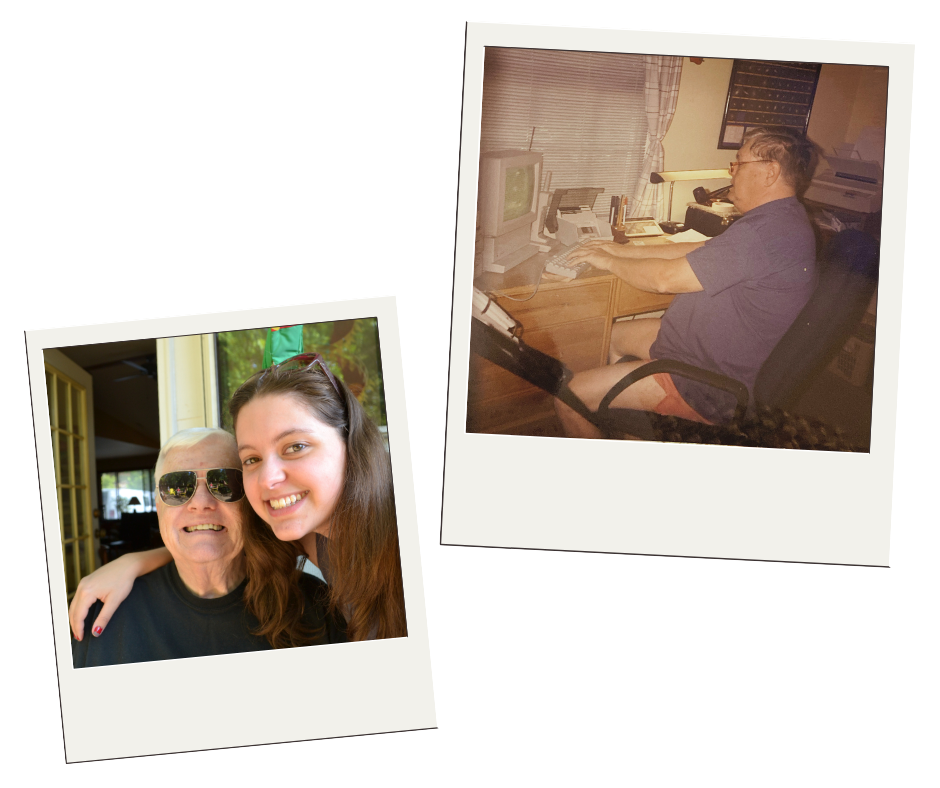
I’ve been thinking a lot about my grandfather, Bob, lately. He passed away on March 19—one of the reasons why I haven’t been active online. We celebrated his life a few days ago, so gathering memories to share at the event had me in a reflective mood. At the very least, I’m going through the complicated human experience of losing someone who was a staple of my childhood, someone who was a regular witness to my growing up and coming of age—taking a step even deeper into adulthood. But he was also someone who influenced my career, in both direct and indirect ways.
A lot of my posts lately have reflected on my early influences and exposure to history, from American Girl dolls to coloring books and Smithsonian visits. But in my family, being interested in history isn’t really going against the grain. My grandpa was one of the people who ensured that history was always present in my life, as much a childhood staple as Spongebob and grilled cheese sandwiches. During those summer vacations, I didn’t watch him research and think that I’d like to follow in his footsteps. It was just normal life. Didn’t everyone’s family appreciate the complexities of colonial land grants and seventeenth-century paleography?
Now, obviously, I recognize the impact. I can see the straight line that most people would draw between my grandpa and me. After retirement in the mid-1990s, Bob followed his interest in genealogy and colonial history by compiling the aforementioned reference books. The series, Early Landowners of Maryland (edited by my grandmother), compiles major colonial land grants across every county in Maryland. It earned him the Norris Harris Prize, awarded by the Maryland Historical Society (now the Maryland Center for History and Culture) for achievements in historical and genealogical research. You can even find all the volumes in the FamilySearch library. It’s sort of fun realizing that you’re a “nepo baby” in the Maryland history/genealogy world! I’ve actually used his books in my own research, giving me a much better appreciation for what I witnessed as a kid.
I also appreciate that I realized all of this before he passed away, giving us plenty of time to have fun conversations about history, archives, bad handwriting, and funny tract names. When I played hooky from work and visited my grandparents on weekday afternoons, he’d emerge from his office with binders of family records and photographs, wanting to compare genealogy notes. Once, he threatened to throw away much of the research he’d compiled on one branch of our family tree, lamenting that “no one will want all of this when I’m gone.” When I convulsed and made him promise to never, ever, EVER do that, he nodded. “Alright,” he said, “it all goes to you. The new steward.”
I already have many of those materials. In his final weeks, when the family gathered at my grandparents’ house to say goodbyes and ease Bob’s passing, he promised me even more. I’m taking my appointment as his steward very seriously—not only out of a sense of duty, but because it’s a treasured reminder of all those conversations around the kitchen table, those summer days turning the squeaky crank on the microfilm reader.
It’s not to say that there weren’t moments of tension. My grandpa wasn’t always convinced that I could make a living as a historian. It wasn’t personal. History and genealogy were things he did as a hobby, not as a career, and he was always amazed by all the projects I got paid to complete. But as the years passed, he saw that I could cobble together a life doing what we both loved. So much that, every time I visited him over the last months of his life, he’d want to know how I was getting along in my “genealogy business,” in the way a kid might talk to a professional actor or athlete. He’d smile as I told him details of projects that I knew, of all people, he’d understand.
On the last real day I spent with him, just a few days before he died, I had to leave early to keep a professional commitment. That evening, I was giving a virtual talk for the Anne Arundel County and Howard County, Maryland genealogical societies. “Tell them I say hello,” Bob joked, before he offered to give the talk on my behalf. I suggested a future speaking tour as a grandfather-and-granddaughter duo, which made him smile. Then he nodded, squeezed my hand, and lowered his voice for just the two of us to hear. “Listen…if you can make it all work, doing this…then I’m glad. It’s just great.”
And then, as always, he left me with one of the many catchphrases that will be part of my lexicon for the rest of my life: “Keep up the good work!” He knows I intend to.
I'm sad to hear your grandfather died and that's why I haven't read more of your posts lately. I'm sorry for your loss. A beautiful tribute to him and do keep up the good work.
What a wonderful tribute to your grandfather. I am sure he is proud of you.